
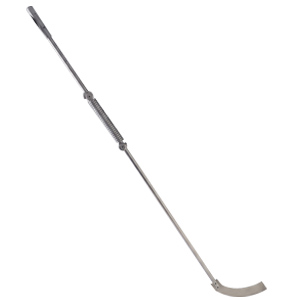
Albero di Prolunga a Bandiera per Sensore di Livello a Paletta Rotante


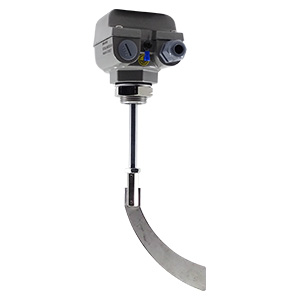
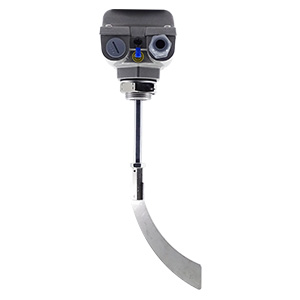
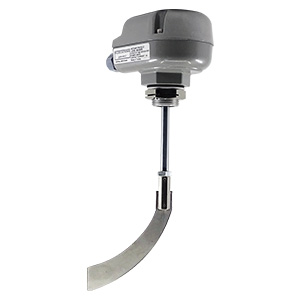
 INFORMAZIONI GENERALI
Motorized level sensors operate based on the principle of physical resistance using an electrically driven rotating mechanism. Thanks to this, they provide error-free point level detection in dusty environments where complex electronic sensors might fail.
How Does the System Work?
Free Rotation: When there is no solid material inside the silo or bunker, the paddle (vane) at the tip of the device's motor shaft rotates freely.
Material Obstruction and Jamming: When the material level reaches the location of the sensor, the rising raw material jams the rotating paddle, preventing it from turning.
Switch Triggering and Power Interruption: When the paddle cannot rotate, the motor itself turns slightly around its own axis, closing a mechanical micro-switch. At this moment, the power to the motor is automatically cut off (preventing the motor from burning out), and a "level detected" electrical signal is sent to the external control system.
Resuming Operation: When the material level drops below the paddle, a spring-loaded mechanism returns the motor to its original position; power is restored to the motor, and the paddle continues to rotate freely.
VANTAGGI E AREE DI UTILIZZO
Maximum Mechanical Stability: Stable and consistent measurement in harsh outdoor environments and dusty factory fields.
Protective Smart Design: Thanks to its internal mechanism that cuts off its own power when the motor is jammed, it features a near-zero motor failure rate and an exceptionally long operational lifespan.
Easy Assembly: Minimizes operational downtime and labor costs with the advantage of quick and straightforward installation.
Application Areas:
| Codice azionario | Capacità/Lunghezza/Tipo | Descrizione del Prodotto | Pezzo | |
|---|---|---|---|---|
6 S1 M2 UA100 P01 |
100 Cm | Albero di Prolunga a Pala da 100 cm |
1
|
OTTENERE UN PREVENTIVO
|
6 S1 M2 UA120 P01 |
120 Cm | Albero di Prolunga a Pala da 120 cm |
1
|
OTTENERE UN PREVENTIVO
|
6 S1 M2 UA150 P01 |
150 Cm | Albero di Prolunga a Pala da 150 cm |
1
|
OTTENERE UN PREVENTIVO
|
6 S1 M2 VAC220 S01 |
220 Tipo a paletta VAC |
1
|
OTTENERE UN PREVENTIVO
|
|
6 S1 M2 VDC024 S01 |
24 Tipo a paletta VDC |
1
|
OTTENERE UN PREVENTIVO
|

